



Late train times can have an impact on appointments, connections, and pick-up arrangements. Online tracking allows you to view the latest reported train location, to see when the train is expected to arrive, and to see the current service status. A railway website, mobile application or live map can be used. This guide provides an easy-to-follow explanation of each option.
What Is Real-Time Train Tracking?
Real-time train tracking is a digital service that gives real-time information of a train’s journey. It can display the final station passed, next station to pass, expected arrival time, and any delays reported. Some services also include the train on a route map to make it easier to understand the train’s journey.
Real-time is not necessarily second-by-second updates. Information can change periodically, for example every few minutes, or as the train reaches a reporting point. In some instances, the location is determined by timing and signalling data rather than from a GPS location.
How Online Train Tracking Works
GPS equipment, signaling systems, track sensors, station reports and control center data are all sources of information collected by railway operators. This is added to the planned timetable. This latest information is then updated on official websites, station displays, mobile apps and travel platforms for passengers to see.
Related article: How to Track My Location on Android – Check My Location
GPS Location Data
Some trains are equipped with GPS so that the location is periodically sent. These coordinates are used to display the train on a map in tracking platforms. Signals may be weak, however, in tunnels, out-of-the-way places, covered stations, or mobile phone coverage areas with weak signals.
Railway Signaling Data
Railway signaling systems keep track of trains while they are passing through various parts of the track. This type of system can assist with traffic control and safe distances. The selected operational data can also be used to validate based on the train’s entry and exit time to/from a specific area.
Estimated Location Data
If the location information is not directly provided, a service can find an estimate of the train’s location. It applies to the last known station, timetable, route length, and normal travel time. These estimates are helpful, but may be less accurate in times of delays or disruptions.
Details You Need Before Tracking
Typically the quickest way to find a journey is by the train number/special code. It can be in your ticket or booking confirmation, on the railway account, or on the departure board. You may be able to find the number from the route and/or time of departure.
Be sure to have this information to hand:
- The train numbers or service codes.
- Train company/railway line
- Departure station
- Destination station
- Scheduled departure time
- Date of travel
- Train name (if applicable)
- A reference number for the booking
Please be sure to read the travel date very carefully. Overnight trains might leave on one day and arrive the following day. A lot of tracking systems may structure the entire service on the date it initially left.
Use an Official Railway Website
The official railway site should be the first one you go to. It includes verified information from the operator and normally contains confirmed information regarding delays, cancellations, diversions, and alternative transport. Check for pages called “Live Train Status,” “Running Information,” or “Departures,” “Arrivals,” or “Service Updates.”
Steps to Track a Train on a Website
The plan varies from country to country and from company to company. But the overall procedure is typically similar. Be sure to visit the operator’s original website and not an advert or an unofficial site with a similar name.
- Visit the official website of the railway or train company.
- Look for the “Live status or journey information” section.
- Type the train number, route or station names.
- Choose the right date and approximate time of departure.
- Select the match that comes up in the search results.
- Look at where it is now, how long it has been delayed and when it will arrive.
- Refresh the page to see the latest update.
The information provided on official websites may be presented in a simple format, but is crucial during a major disruption. If another app says it was canceled or had a significant change in routes, check the operator’s website first before changing your plans.
Track a Train with a Mobile App
If you are already traveling, this railway app is helpful. There are plenty of applications that integrate live status, trip planning, digital tickets, platform information, and service alerts. You can also save your trip in the application so that the subsequent checks are quicker, as the information will not need to be entered again.
Official Railway Apps
Official Apps are controlled by the railway companies, transport authorities or the authorized ticket providers. They have reliable service notices and links to customer support. Only download them from a known app store or from a link provided by the operator’s official web page.
Third-Party Tracking Apps
Independent applications might have more pristine maps, multi-operator searches, delay history, or more straightforward journey sharing. They will be especially useful on a trip involving multiple companies. But their information may not be available at the same time as official information, particularly when there are rapid operational changes.
When installing an App, check:
- If you have a railway network, it could cover it.
- The last update was done when
- Whether live tracking is complimentary
- The permissions that it asks for in your phone.
- Often the reviews are recent, and some of them may state that the data is reliable.
- How it takes care of personal and geographic data.
Search Using the Train Number
The quickest method of searching is normally by the train number. Please type in the entire number or service code exactly as listed on the ticket. Before choosing a train, check multiple results to see which is the best option for you based on the route, date, destination, and departure time.
Please don’t mix up the train number and the booking reference. The train number is the service you are booking; the booking reference is your booking. Some platforms offer both, but they might be required to be entered in separate search boxes.
Search by Route and Station
If you don’t know the train number, you can still find it. Input the departure station, destination, date of travel, and approximate time. All the services that match those details should appear on the platform, from which you can choose the right one.
The other way is to click on the live departure or arrival screen of a station. Look for the train by its destination and time of departure. This can be useful when meeting up with a passenger and only the time they should arrive is known.
Track with a Booking Reference
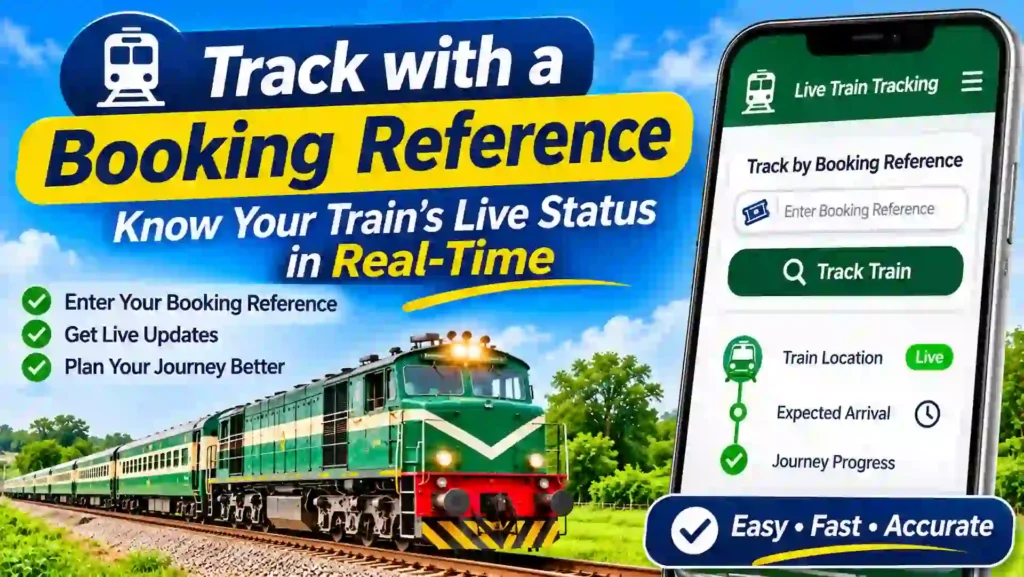
Some of the railway websites have a reference on booking, code of reservation, or a ticket number that is linked to live journey information. The train and route may be automatically entered if you click on it. This feature can be particularly useful when you have multiple bookings involving multiple flights or transfers.
Respect the private information of booking details. Your name, route, seat, and other personal details may be disclosed by a reference number. Only fill it in on the official webpage of the railway or its official app or on the trustworthy booking platform that issued the ticket.
Use a Live Train Map
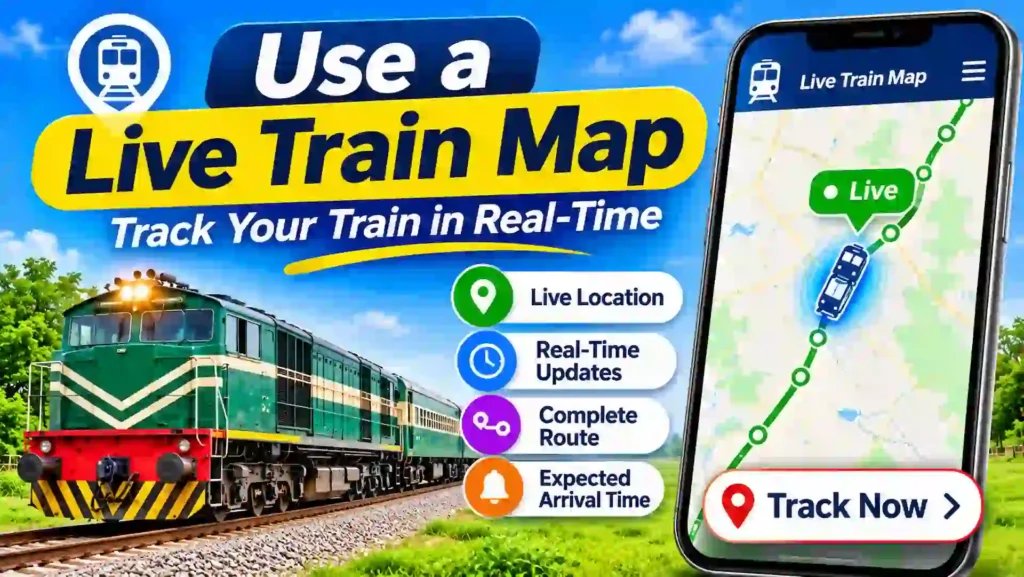
A live map provides an on-screen representation of the train’s journey. It can display the path taken, nearby stations, direction of travel, and estimated arrival. This allows you to more easily gauge the distance between your train and destination or your train and the platform you get on.
The train icon may not depict the actual location of the train. Maps may calculate progress between the last known and next station. Look for the words “live,” “estimated,” “scheduled” or “last reported” to be sure you understand the information.
Track a Train Without Mobile Data
In rural areas, underground stations and in crowded areas, Internet access may be weak. Some operators offer SMS updates, automated telephone lines or helplines to customers. These options are subject to change in different countries; please visit the official railway website before you travel.
SMS Train Updates
If there is an SMS service, you can use an SMS service number to send a train number to an official short code. Last reported station, Current delay, and expected arrival may be included in the reply. You are using the exact message format supplied by the operator and keep in mind that regular message fees may apply.
Railway Telephone Services
If the online tracker doesn’t work, a railway helpline can help. Be prepared to call with the train number, the date of the journey and the names of the stations. Call Queues may be long in cases of severe disruptions or holiday travel and station information may be faster.
Compare Train-Tracking Methods
There is no one tracking technique that works in all cases. It depends on the available internet connection, railway network and the information you need. The most popular choices are outlined in the table below.
| Tracking Method | Internet Needed | Main Benefit | Possible Limitation | Best For |
|---|---|---|---|---|
| Official railway website | Yes | Verified operational details | Design may be basic | Delays and cancellations |
| Official mobile app | Yes | Alerts, tickets, and status together | May require an account | Regular passengers |
| Third-party website | Yes | Simple searches and comparisons | Updates may be delayed | Quick checks |
| Third-party app | Usually | Multi-operator journey tools | Some features may cost extra | Complex journeys |
| Live train map | Yes | Clear visual route progress | Position may be estimated | Checking distance |
| Station arrival page | Yes | Local times and platforms | Covers one station | Meeting a passenger |
| SMS service | No mobile data | Works with weak internet | Not available everywhere | Remote locations |
| Railway helpline | No mobile data | Direct support | Waiting times may be long | Urgent questions |
If a train is cancelled, diverted or significantly delayed, use an official source. Third-party services will be beneficial for both convenience and comparison of paths, but the operator of the railway service makes the final choice as to the operation of the service.
How to Read Live Train Information
The number of times a page is tracked can be greater than once for the same station. The time to be used is that published in the timetable. An estimated time is the most recent forecast; an actual time is the time of arrival or departure of the train.
Common terms include:
- On time: The train will be on schedule.
- Estimated: A time that is expected to arrive or leave.
- Actual: A time that was actually recorded.
- Delayed: Service is running late.
- Cancelled: The train will not run.
- Diverted: The train is following a different route.
- Terminated: The trip will stop short of its intended destination.
- Platform pending: Platform has yet to be confirmed.
The delay may vary along the way. A train can recover time on one stretch and have a greater time loss on another. Pay attention to the more recent estimate of when you’ll arrive at the station, not just the total delay.
How Accurate Is Online Train Tracking?
The accuracy is dependent on the operator, route, technology, and quality of the data connection. The distance from the actual location may be close with a direct GPS update. A timetable estimate is less accurate if a train fails to arrive at a station on schedule.
When searching for a “last updated” date, always look for a “last updated” time. A position reported several minutes ago should not be interpreted as being exact. Compare information from the internet with information on station boards, public announcements, staff information, and official notices during disruption.
How to Track Someone Else’s Train
When meeting a friend or family member at the station, a train can be tracked. Request the train number, travel date, destination and planned arrival. These are not the private booking reference, ticket number or seat number and generally are not required.
Check for the service and check the time of the estimated arrival at the meeting station. Give additional time for passengers to get off the train and walk through the terminal. Lots of people, bags, and big stations can amount to several minutes after you arrive.
Don’t assume right away that there is a problem if the train has disappeared from a map. It’s possible that the data feed has temporarily ceased. Refer to the official arrival station page or, when safe and convenient for the passenger to respond, check with the passenger.
Tips for More Reliable Tracking
With a couple of checks, the chances of seeing the wrong train and/or acting on yesterday’s information are minimized. These habits should be used when taking a trip:
- Double-check the entire train number
- Choose the appropriate travel date
- Match up the starting station and destination
- Please refer to the last updated date of the page.
- Update the tracker where there are big delays.
- Reiterate any major changes from an official source.
- Allow alerts to be sent for significant trips
- Don’t let your cell phone battery die during your trip
- Keep important information with you that you can access without a network.
- Don’t announce your bookings over the internet
What to Do If Tracking Stops Updating
A frozen tracker does not necessarily mean the train has stopped. The platform could be in a moment where it has lost signal, or the operator’s data feed could be delayed, or the website is experiencing high traffic volumes. First, take a look at the update time.
Try these steps:
- Clear the cache or restart the app.
- Make sure you have an internet connection.
- Do a search on the official website of the operator.
- Open the next station’s arrival board.
- Check for disruption or maintenance information.
- If at the station, take note of announcements.
- If needed, call the railway company.
Protect Your Privacy While Tracking
Check permissions for any app that is installed. Access to location can be useful for locating nearby stations, but may not be required in a train number search. If available, opt for “only while using the app” rather than permanent access to location.
| Train Live Location |
|---|
| Real Time Train Status Online |
| Real-Time Train |
Only share live journey links with trusted individuals. If possible, eliminate access after the trip. The train’s position is public information, but your name, booking reference, ticket number, seat, and full travel plan should be kept private.
Related article: Realtime Location Tracker-Gps Tracking Live
Travel Smarter with Online Train Tracking
If you know the train number, route, date, or time of departure, tracking a train is easy online! Start on an official railway website or app and then use live maps or independent services for added convenience. Look for the update time and verify significant changes with official updates. All these measures help to make train journeys more manageable and less stressful.